Neither left nor right — straight down · Every significant claim is cited · Opinion is labeled opinion, always
← Back to home
Where the reporting comes from
Our Sources
Every outlet we draw from, which tier it sits in, and why it sits there. No source gets a pass because of its politics. No source gets disqualified because of its politics either.
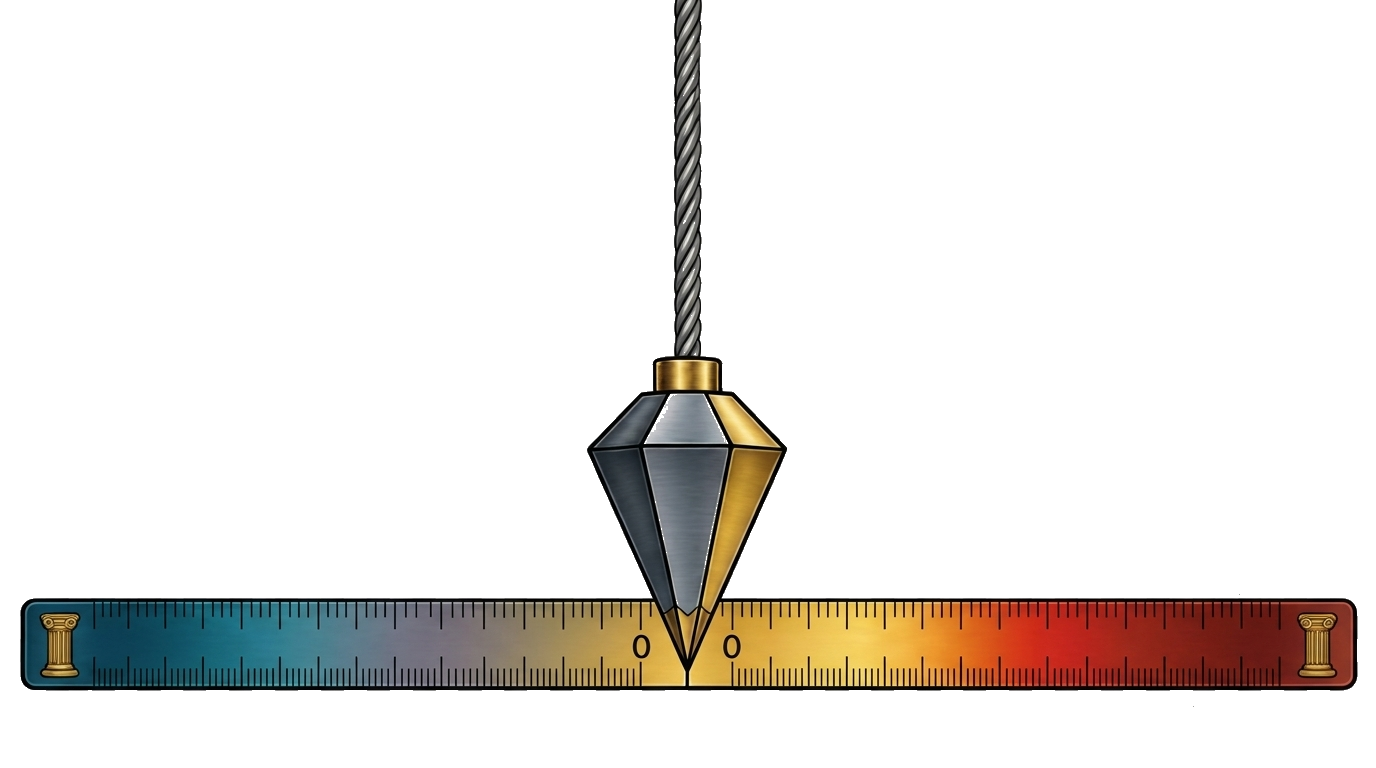
The three-dot badge on every piece — left, center, right — represents a commitment, not a decoration. It means the piece drew on reporting from all three tiers before reaching any conclusion. This page explains what sits in each tier, how those placements were made, and what the reporting-versus-opinion distinction means in practice.
Tier placement is not a judgment about whether an outlet is trustworthy. Every outlet on this list has produced credible reporting. Every outlet on this list has also published opinion content that does not belong in a factual claim. The tier tells you the outlet's general editorial lean. The label — reporting or opinion — tells you which kind of content a specific citation draws from.
Why three tiers and not two
A simple left/right binary flattens the most important distinction on the list. Wire services and international outlets — Reuters, AP, BBC, NewsNation — operate under different incentive structures than domestic partisan media. They are not centrist in the sense of splitting differences. They are sourced differently, edited differently, and held to different standards. Treating them as a third category rather than a midpoint between the other two is the honest call.
CBS News
Broadcast network news division. Strong reporting operation. Editorial direction generally center-left.
NPR
Public radio. Extensive domestic and international reporting. Audience and coverage lean left of center.
HuffPost
Digital outlet with clear left-leaning editorial perspective. Mix of reporting and commentary.
New York Times
Significant reporting operation with national reach. News division and opinion section operate separately; editorial board leans left.
Reuters
International wire service. Publishes to news organizations worldwide. No editorial opinion section. Reporting-only operation.
Associated Press
American wire service with global reach. Standards-based reporting. Distributed to thousands of outlets across the political spectrum.
BBC News
British public broadcaster with international bureau network. Subject to its own impartiality standards under its Royal Charter.
NewsNation
Cable news network explicitly positioning itself as non-partisan. Relatively new; included for its stated neutrality commitment and wire-adjacent approach.
Fox News
Largest cable news audience in the United States. Clear right-leaning editorial direction. Reporting division and opinion programming are distinct operations.
Newsmax
Cable and digital outlet with right-leaning editorial perspective. Mix of news reporting and heavy opinion programming.
One America News
Cable outlet with strong right-leaning commentary. Included when its reporting is the primary available source for a perspective.
Blaze Media
Digital and streaming outlet. Predominantly right-leaning opinion and commentary. Cited when it represents the strongest available articulation of a conservative argument.
The reporting vs. opinion distinction
Tier placement tells you the outlet's general lean. It does not tell you whether a specific citation is a fact or an argument. That is what the reporting-versus-opinion label does — and it applies identically across all three tiers.
How it works in practice
A Fox News correspondent reporting that a Senate bill passed 52–48 is reporting. Tucker Carlson's opinion on what that vote means is opinion. An NPR correspondent reporting the same vote is reporting. An NPR opinion columnist's interpretation is opinion. The bill passed 52–48 regardless of which outlet reports it. The interpretation belongs to the person who wrote it — and is labeled accordingly here, regardless of which side they sit on.
When a piece at The Plumb Line Post cites opinion content, it is cited as an argument — the strongest case a position's defenders would make — not as a factual claim. The label is never dropped because an opinion happens to align with a conclusion we've already reached. Symmetric standards are non-negotiable.
Disagree with a placement?
If you believe an outlet has been miscategorized, belongs on this list but isn't here, or should be removed, make the case. Use the Challenge a Piece link in the footer — it applies to source placements as well as individual articles. We will consider every argument made in good faith and update this page when the case holds up.